

Chimney sweeping and cleaning in Longmont.
Sweeping takes the sooty coating out of the flue, off the smoke shelf, out of the firebox and out of any stove pipe. Telephone us, or send the form whenever you like.
- reviews on Googleas of
The phone line is answered Monday through Sunday, 7 AM to 9 PM. The form stays open day and night.Phone line open now, until Phone line opens . Book online now.
- Book onlineAny hour
Photo: Longmont, United States (Unsplash PBqmXEhsKMY), Jeremy Thomas, CC0
Sweeping, one stage at a time.
What comes out of the flue, how often it should, and what to sort out ahead of the first fire of the season.
What comes out of the flue.
Every fire leaves a thin coat on the walls of the flue. New soot is dry and brushes off easily. After many cool, slow burns it becomes a sticky tar, and in the end a hard glassy skin that resists even a stiff brush.
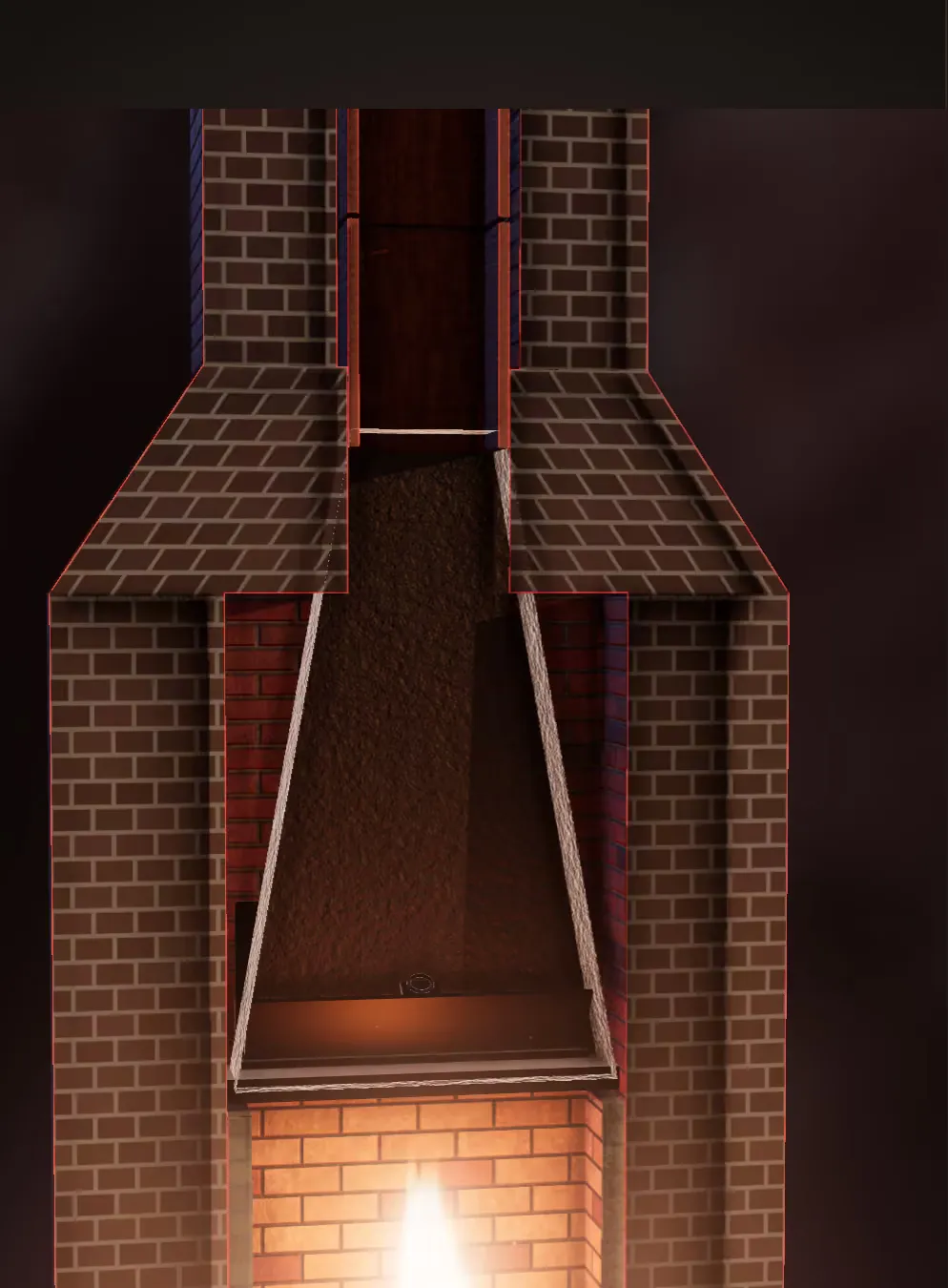
The work goes top down from the damper: flue walls, then the smoke shelf, then the firebox floor. Whatever comes loose is collected and carried away, so none of it stays behind to feed a later blaze.

From our Google Business Profile What a clean flue buys you.
A chimney fire begins when built-up creosote catches inside a passage meant for smoke. Take the deposit out and a stray spark finds nothing to hold on to.
A clean flue also pulls better. Smoke rises out of the house, rather than backing into the room as soon as you open the damper.
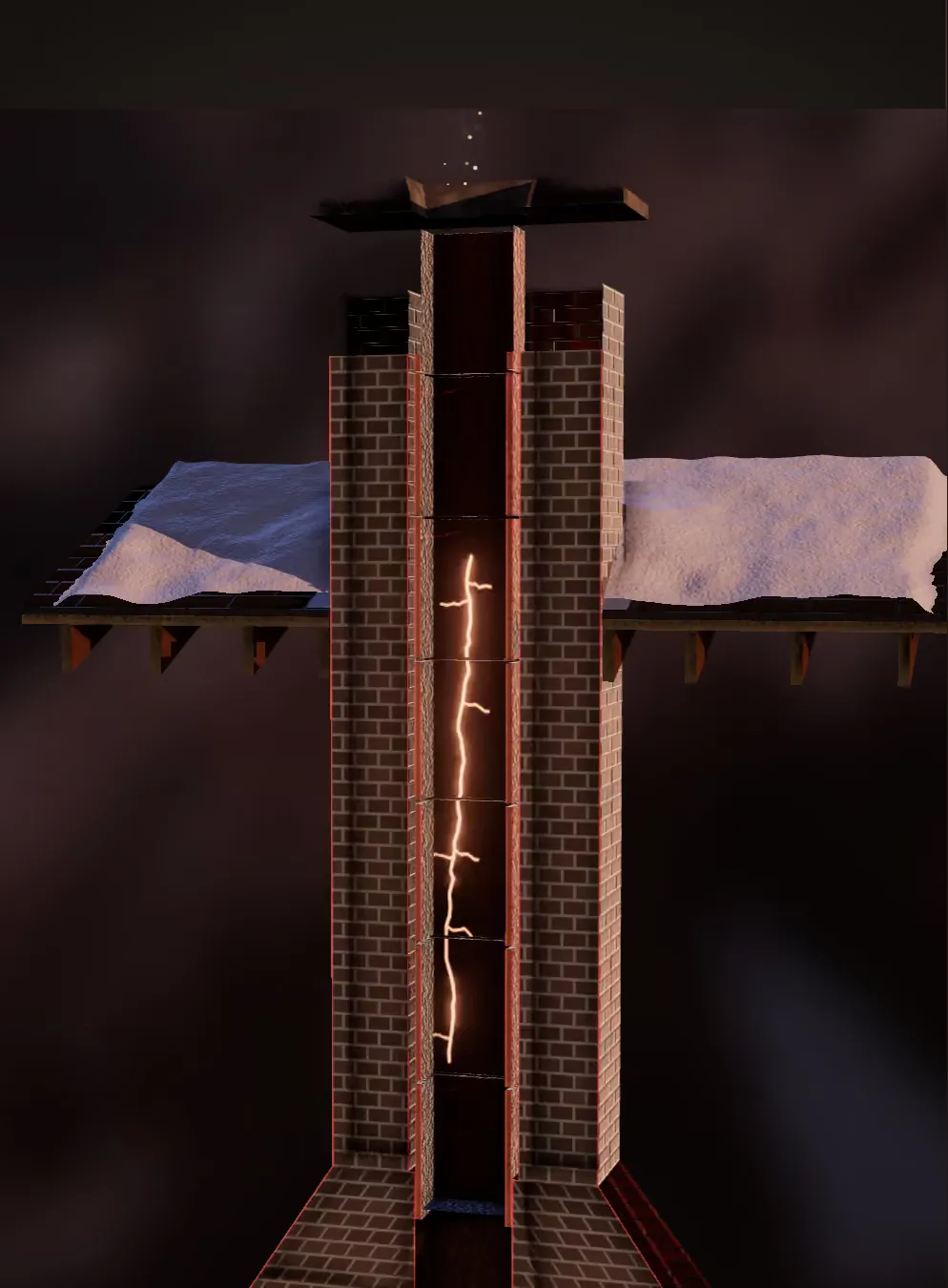
Illustration Right at the top.
Smoke is at its coolest when it reaches the cap, and that is where soot likes to stick. A mesh that clogs weakens the draft, but the same mesh is what keeps embers in, so we clean it on every sweep.

From our Google Business Profile
Questions about sweeping.
Brief answers, naming a source where one exists.
How do I know it is time for a sweep?
Look at the deposit, not the date. NFPA 211 recommends a yearly inspection, and that visit shows how much has collected and what kind it is. Anything shiny or tar-like should not wait.
Do I need a sweep, an inspection, or both?
A sweep takes deposits out, while an inspection assesses how sound the chimney is from top to bottom, graded at one of the three NFPA 211 levels. Since soot can hide damage, many visits include both.
What is glazed creosote?
It is creosote that has baked into a hard, shiny, tar-like skin. It tends to form where smoke cools slowly, as in a stove turned down overnight, and a brush hardly moves it, so spotting it is a cue to book sooner.
Is sweeping needed for a gas fireplace?
Gas leaves no creosote, yet its vent still has to be clear. Bird nests, leaves and bits of a worn liner can choke it, so an occasional look at the vent is wise.
Why is the smell stronger in summer?
Warm, humid air brings the odor of creosote out, and a downdraft can drive it into the room. Cleaning out the deposit removes the cause.
How do I book a sweep?
Phone (970) 610-0859 (Monday through Sunday, 7 AM to 9 PM). The form below takes requests around the clock, and a person calls back to settle a day.

Book your visit.
Tell us what looks wrong on the form, or simply phone, and we will ring you back to settle on a day.
- 1Get in touch Ring the office or send a few lines through the form.
- 2We phone you A person calls back and picks a day with you.
- 3Roof to hearth The visit starts at the cap and finishes at the firebox, one part after another.
- 4You decide We tell you what we saw, and what happens next is up to you.
Online
At any hour, by form
Photo: Longmont star trails, Jeremy Thomas, CC0
Would you like the fireplace ready before the first cold night, or answers about something you noticed on the roof?
The phone line is answered Monday through Sunday, 7 AM to 9 PM. The form stays open day and night.Phone line open now, until Phone line opens . Book online now.
Book online